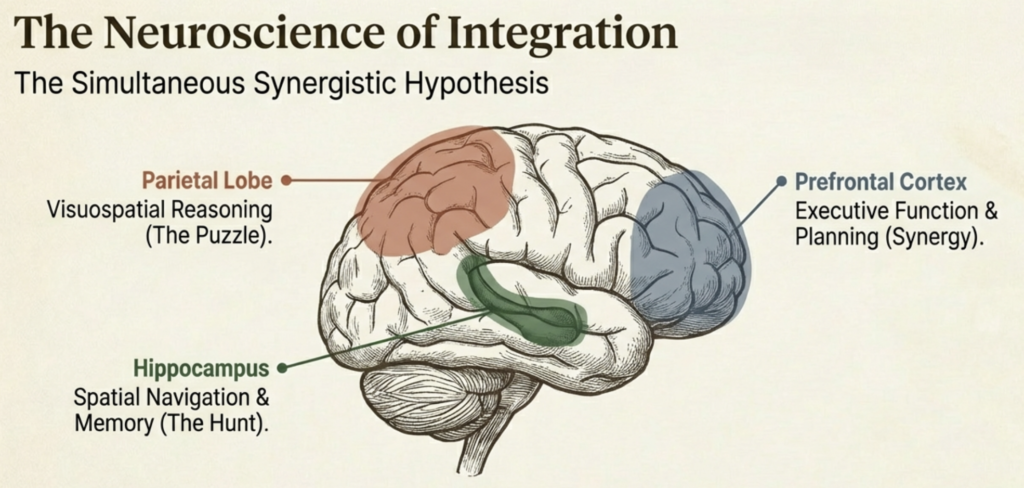
Based on the provided sources, jigsaw puzzles induce a meditative ”Alpha state” through a combination of focused attention, tactile engagement, and neurochemical rewards.
Here is how the process works:
- Shifting Brain Waves: The act of focusing on a single, tactile task allows the brain to shift away from Beta waves(the state of ”wakeful alertness” associated with daily activity and stress) into the Alpha state. This is the same mental state associated with meditation and deep dreaming.
- Neurochemical Reward (Dopamine): The process of finding and successfully placing a puzzle piece triggers the release of dopamine, a neurotransmitter associated with pleasure, reward, and motivation,. This creates a continuous loop of ”little satisfying experiences” that boosts mood and provides a grounded sense of accomplishment.
- Stress Reduction: Entering this Alpha state fosters mindfulness and significantly reduces levels of cortisol (the stress hormone). This physiological shift can result in lowered blood pressure, a reduced heart rate, and a sense of tranquility similar to traditional meditation.
- Tactile ”Digital Detox”: The benefits are amplified by the analog nature of the activity. Unlike digital games, the physical handling of pieces provides a tactile grounding that helps the brain disconnect from ”digital overload” and the hyper-vigilance of the attention economy.