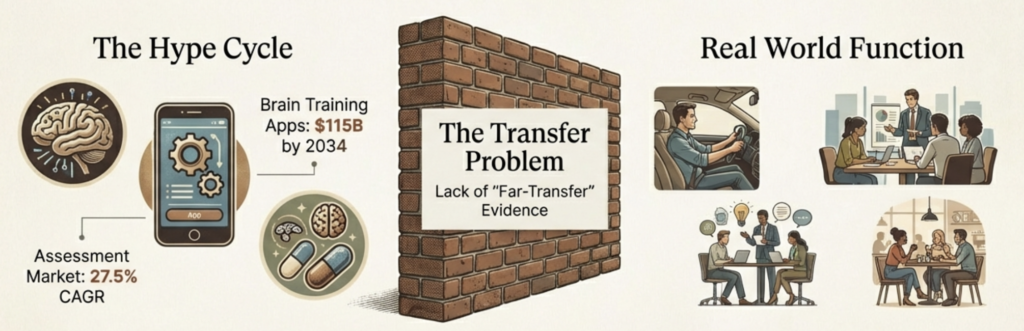
Based on the provided sources, the proven cognitive benefits of puzzles and games vary significantly depending on the type of activity (analog vs. digital), the specific cognitive domain targeted, and the age of the participant.
The evidence suggests a distinction between general ”brain training” games, which often face a ”credibility gap”regarding their real-world efficacy, and specific interventions or analog activities that have robust support.
1. Visual-Spatial Reasoning and Fine Motor Skills
Jigsaw puzzles are particularly effective at training the brain to perceive, understand, and reason about spatial relationships. This engages the parietal lobe, the area of the brain responsible for spatial cognition.
- For Children: Puzzles are foundational. They develop hand-eye coordination and fine motor skills (picking up, twisting, and fitting pieces), which correlate with later abilities in handwriting and typing. The mental manipulation of shapes to form a whole is also related to future math and writing proficiency.
- For Adults: Jigsaw puzzles serve as a ”benchmark” for spatial reasoning, requiring a continuous cycle of ”seeing, understanding, and reasoning”. Regular engagement with puzzles can improve global visuospatial cognition, which translates to real-world tasks like driving, using maps, or packing boxes.
2. Memory and Speed of Processing
While many digital brain training apps claim to boost memory, the scientific consensus is nuanced.
- The ”Transfer Problem”: Most general brain training games improve performance within the game (near-transfer) but fail to improve broader cognitive abilities in daily life (far-transfer).
- The Exception (Speed of Processing): There is strong clinical evidence for Speed of Processing Training (SPT), also known as Useful Field of View (UFOV) training. In the landmark ACTIVE trial, this specific type of training was found to reduce the risk of dementia by 29% over a 10-year period, with results improving further for those who did ”booster” sessions.
- Working Memory: Puzzles exercise working memory by forcing the brain to retain information about shapes, colors, and the overall image simultaneously.
3. Executive Function and Problem Solving
Games and puzzles require strategic planning, testing hypotheses, and adapting to new information, all of which fall under executive function.
- Strategic Thinking: Solving a puzzle involves trial-and-error and critical thinking strategies, such as sorting by color or edge, which helps individuals learn to approach problems from different angles.
- Scavenger Hunts: These activities specifically target decision-making and planning. When combined with physical movement (dual-tasking), they train the brain to manage cognitive load while navigating the real world, a skill that is critical for independence but often declines with age.
4. Spatial Navigation and Hippocampal Health
Scavenger hunts and location-based games provide a unique benefit distinct from stationary puzzles: they exercise the hippocampus, the brain region essential for navigation and memory.
- Active Navigation: Research suggests that active self-navigation (as opposed to following GPS directions) exercises the hippocampus. This is supported by studies showing that London cab drivers, who memorize complex city layouts, have larger hippocampi.
- Dual-Tasking: Combining physical navigation with cognitive clues (as in a scavenger hunt) creates a synergistic effect, potentially yielding greater neuroplastic benefits than doing either activity in isolation.
5. Stress Reduction and Emotional Regulation
The ”Analog Revival” highlights that the cognitive benefits of puzzles are deeply intertwined with their ability to induce relaxation and regulate emotion.
- The ”Alpha State”: Focusing on a tactile task like a puzzle can shift the brain from a state of wakeful alertness (Beta waves) to a relaxed ”Alpha state,” similar to meditation. This reduces cortisol (stress hormone) levels.
- Dopamine Regulation: The immediate feedback of fitting a puzzle piece or solving a clue triggers the release of dopamine, the brain’s reward chemical. This provides a continuous sense of accomplishment (”little satisfying experiences”) that improves mood and motivation.
- Digital Detox: Analog games provide a refuge from ”technostress” and ”digital fatigue,” helping to restore attention spans fragmented by the attention economy.
6. Cognitive Reserve and Long-Term Brain Health
The overarching benefit of lifelong engagement in these activities is the buildup of cognitive reserve.
- ”Use It or Lose It”: The theory of cognitive reserve suggests that a lifetime of mentally stimulating activities (like puzzles, games, and complex hobbies) builds neural resilience. While this does not prevent brain pathology (like Alzheimer’s plaques), it allows the brain to function more efficiently despite damage, delaying the onset of clinical symptoms.
- Protection for Seniors: Engaging in jigsaw puzzles has been identified as a potential protective factor against cognitive aging, with regular puzzlers over 50 performing better on global cognitive tests.
Summary of Proven Benefits by Activity Type
| Activity Type | Primary Proven Cognitive Benefits |
|---|---|
| Jigsaw Puzzles | Visual-spatial reasoning, fine motor skills, stress reduction (Alpha state), working memory. |
| Scavenger Hunts | Spatial navigation (hippocampus), decision-making, dual-tasking proficiency. |
| Speed of Processing Training | Reduced dementia risk, improved visual attention speed (clinically validated). |
| General Brain Apps | Improvements in specific game tasks (near-transfer), but limited evidence for real-world improvement (far-transfer). |
| Board Games | Social interaction (combating isolation), basic cognitive maintenance. |