helmikuu 2026

How does the brain change during creation versus passive consumption?

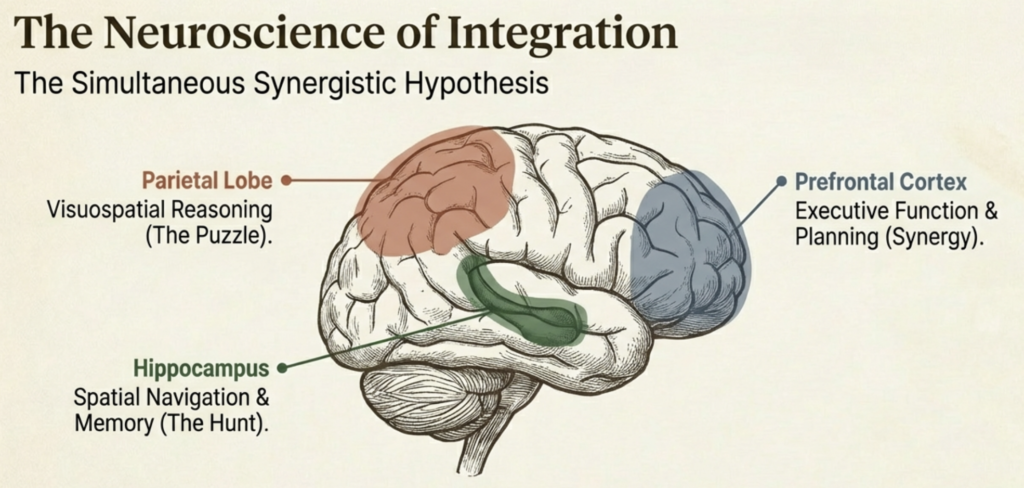
Based on the provided sources and our conversation history, the shift from passive consumption (e.g., scrolling social media, binge-watching) to active creation (e.g., solving puzzles, painting, writing) triggers a fundamental change in the brain’s neurobiology. This is not merely a psychological shift in mood; it is a measurable biological transition involving different brain networks, neurochemicals, and electrical frequencies. 1. […]

How does the brain change during creation versus passive consumption? Read More »
How do analog puzzles compare to digital brain apps for memory?

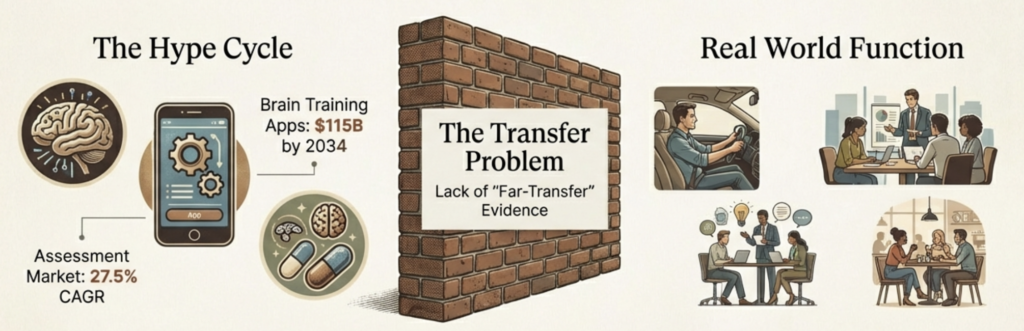
Based on the provided sources, the comparison between analog puzzles and digital brain apps for memory centers on a distinction between specific skill training (digital) and holistic cognitive maintenance (analog). While digital apps offer targeted algorithmic training, they suffer from a ”credibility gap” regarding real-world application. In contrast, analog puzzles are viewed as broad ”protective factors” that engage working memory and

How do analog puzzles compare to digital brain apps for memory? Read More »

What are the proven cognitive benefits of puzzles and games?

Based on the provided sources, the proven cognitive benefits of puzzles and games vary significantly depending on the type of activity (analog vs. digital), the specific cognitive domain targeted, and the age of the participant. The evidence suggests a distinction between general ”brain training” games, which often face a ”credibility gap”regarding their real-world efficacy, and specific

What are the proven cognitive benefits of puzzles and games? Read More »